
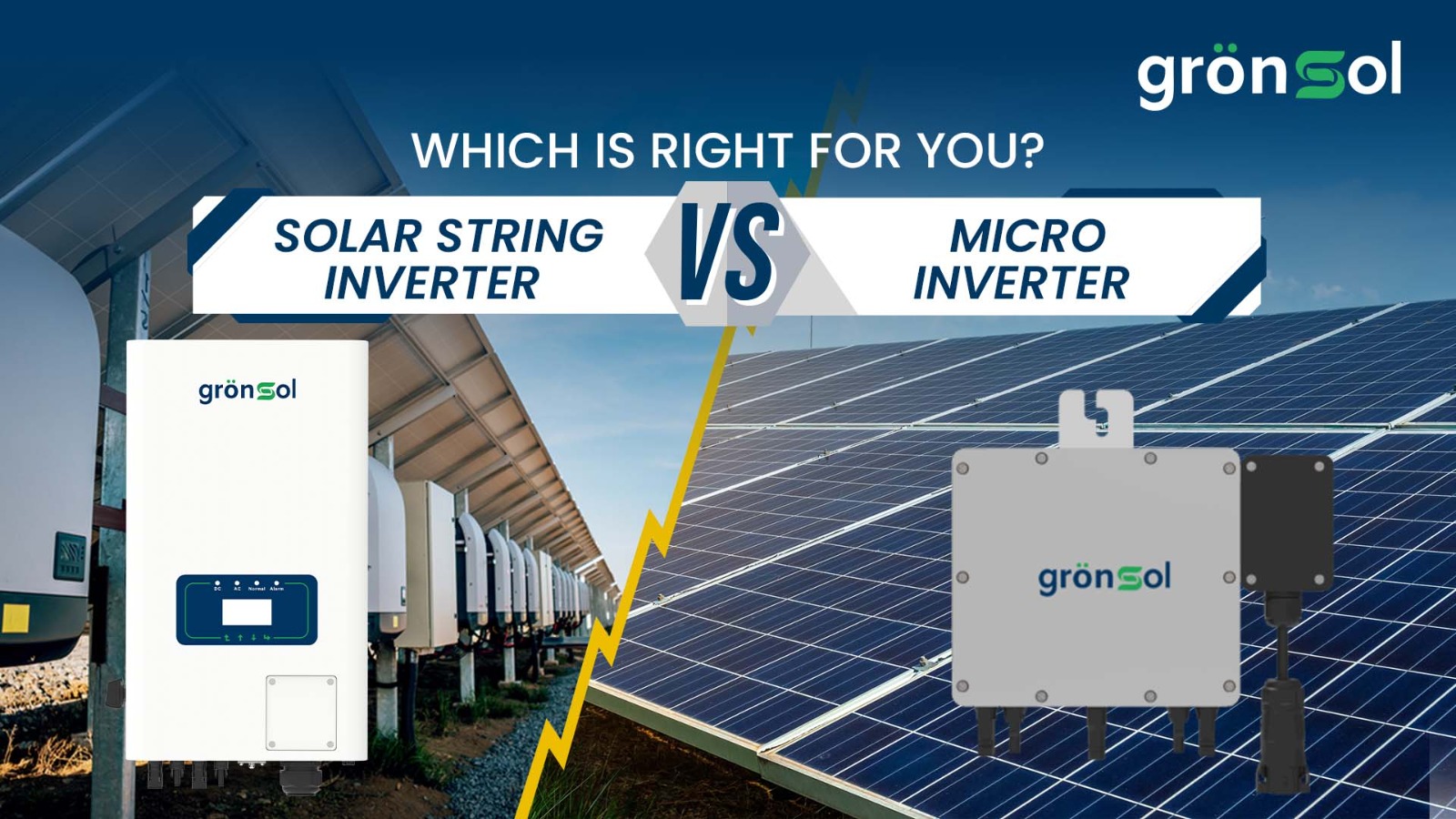

As solar energy adoption continues to grow, one of the most important decisions for homeowners and businesses is choosing the right type of inverter for their solar power system. Inverters are the heart of any solar setup — converting DC electricity from solar panels into usable AC power.
Two of the most common inverter types are:
- Solar String (On Grid) Inverters
- Micro Inverters
But which one is better for your setup? Let’s explore both to help you make an informed decision.
What is a Solar String (On Grid) Inverter?
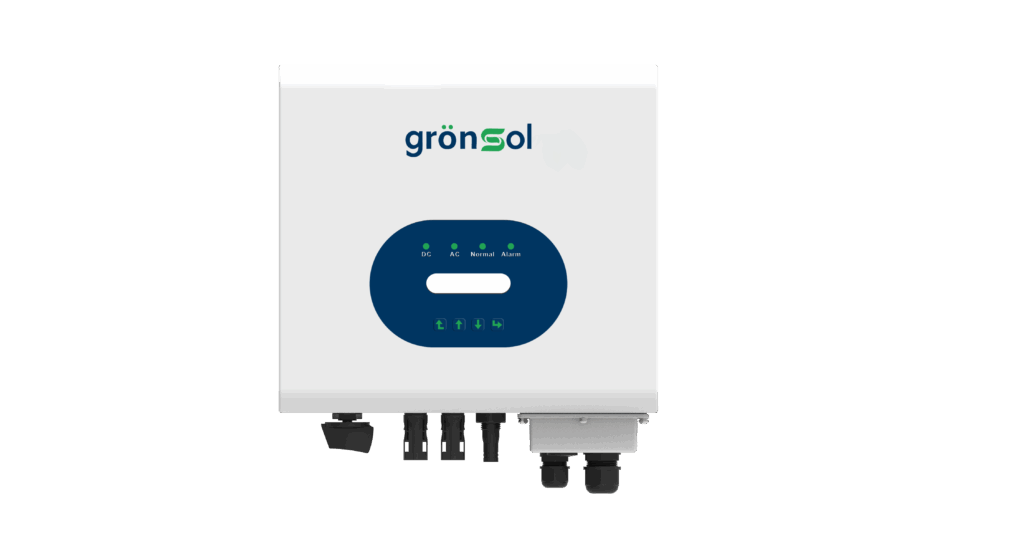
A Solar String Inverter, also known as an On-Grid Inverter or Grid-Tied Inverter, is a key component in solar power systems that are connected to the public electricity grid. It functions by converting the DC (Direct Current) electricity produced by solar panels into AC (Alternating Current), which is compatible with household appliances and the utility grid.
What makes a string inverter unique is how it connects to multiple solar panels in a “string”—typically in series. The combined DC output from these panels is sent to a centralized inverter, which handles the conversion to AC power in one location.
Advantages:
High Efficiency with Modular Design
Modern on-grid inverters adopt a modular architecture, which improves system performance, power quality, and overall reliability. Multiple modules can operate in parallel to enhance redundancy and system availability.
Reliable Power Supply
Even if one or more modules fail, the rest of the system can continue operating. Redundant modules can also be added to improve fault tolerance and system uptime.
Fast & Easy Maintenance
Thanks to a plug-and-play design, failed modules can typically be replaced in under 10 minutes without specialized tools or technicians — reducing system downtime.
Cost-Effective
Compared to microinverters, on-grid inverters have a lower initial cost, especially in larger systems. The cost per watt is lower because one inverter can manage the output from many panels.
Simplified Installation
With fewer components and less wiring, installation and setup are faster and more economical. Fewer parts also make troubleshooting easier.
Applications:
Utility-Scale Solar Power Plants
In large-scale solar farms, on-grid inverters handle electricity from thousands of panels, converting and channeling power to the grid efficiently. These inverters ensure grid stability and are built for high power output and maximum energy yield.
Wind Energy Systems
In wind power applications, on-grid inverters convert variable AC from turbines into grid-compatible AC, helping to stabilize and integrate wind power into the electrical grid seamlessly.
Residential & Commercial Solar Systems
On-grid inverters are also widely used in homes and commercial buildings to reduce dependency on grid power and lower electricity bills through net metering programs.
What is a Micro Inverter?
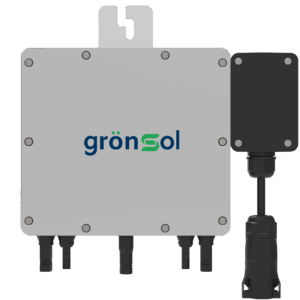
A Solar Micro Inverter is a compact inverter device attached to a single solar panel, converting the DC (Direct Current) output of that panel into AC (Alternating Current) — right at the source. Unlike traditional string inverters, which convert electricity from multiple panels at once, micro inverters operate independently on each panel, enabling panel-level power optimization.
Each micro inverter includes advanced Maximum Power Point Tracking (MPPT), allowing every panel to function at its highest efficiency regardless of shading, orientation, or panel mismatch. This design ensures that the performance of one underperforming panel does not impact the rest of the solar array.
Advantages:
Optimized Performance (MPPT Per Panel)
Each panel operates at its own peak efficiency. Even if one panel is shaded or dirty, it won’t affect the performance of the rest — maximizing your system’s total energy production.
Increased System Reliability
With a distributed setup, the failure of one micro inverter does not disable the entire system. This built-in redundancy ensures continuous power generation and less downtime.
Panel-Level Monitoring
Micro inverters offer granular performance tracking for each panel, making it easier to detect issues, improve maintenance, and enhance long-term performance.
Flexible and Scalable Design
Want to add more panels later? No problem. Micro inverter systems allow for easy expansion without replacing or upgrading a central inverter.
Perfect for Complex Roofs
They’re ideal for rooftops with multiple angles, partial shading, or varied tilt directions — where string inverters would struggle.
Applications:
Residential Solar Installations
Micro inverters are a top choice for homes with shaded or irregular rooftops, or where homeowners want maximum energy yield and performance visibility.
Commercial Solar Projects
Businesses benefit from micro inverters thanks to their modular design, high reliability, and ease of system expansion — especially on buildings with complex structures.
Agricultural Solar Systems
In farms and rural settings, micro inverters are ideal for powering irrigation, lighting, and off-grid applications. They provide dependable energy, even in areas with variable sunlight conditions.
Comparison Table:
| Feature | String Inverter | Micro Inverter |
| Cost | Lower | Higher |
| Performance in Shade | Drops significantly | Maintains output per panel |
| Monitoring | System-level only | Real-time panel-level monitoring |
| Ease of Maintenance | Easier (1 unit) | Slightly complex (multiple units) |
| Expandability | Limited | Highly flexible |
| Best for | Large, unobstructed installations | Residential or partially shaded areas |
Why Choose Micro Inverters?
If you’re looking for a solar solution that combines efficiency, flexibility, and real-time control, micro inverters are the future of solar power. They eliminate the “weakest link” issue common with string inverters and are a smart investment for any property with uneven shading or expansion potential.
Best Micro Inverter Recommendation: Gronsol Micro Inverter
Gronsol Micro Inverter is a high-performance, Made in India solution designed for modern solar systems. It offers panel-level optimization with built-in MPPT, ensuring maximum energy harvest even in partial shading or mixed orientation setups.
With real-time monitoring, high conversion efficiency, and IP67 weather protection, it’s built to last and perform reliably in Indian conditions. Its modular design allows easy expansion without major upgrades, making it ideal for residential, commercial, and agricultural use.
Proudly Made in India for sustainable energy independence.
Related articles: India’s Top 5 On-Grid Solar Inverters in India for 2025, Best Solar Inverter In India- 2025, Best Hybrid Solar Inverters in India, Top 10 Solar Inverter Companies in India – 2025, Top 10 Solar Inverter Manufacturers in the World by 2025
Follow This Page 👇🏻

0 Comments